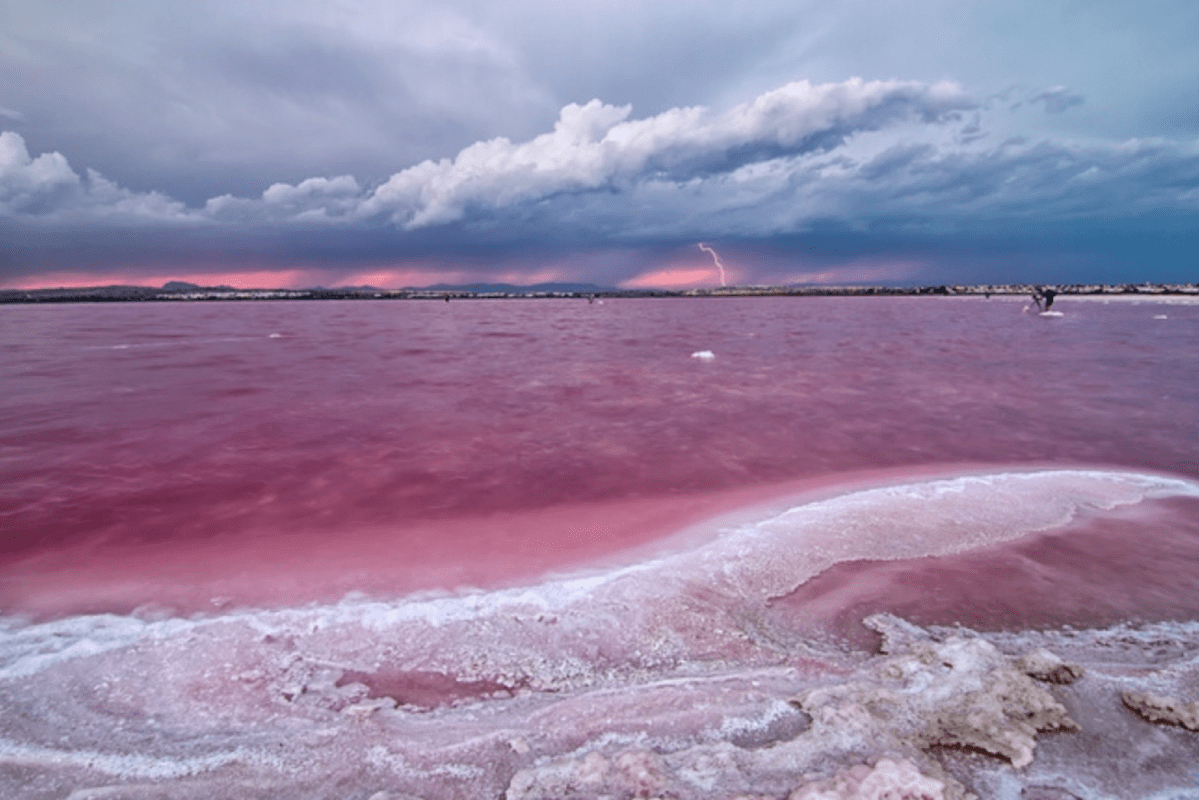
Just outside San Miguel de Salinas, the landscape opens into one of the most visually striking natural features of the southern Costa Blanca. The vast rose-tinted salt lakes that form part of the Lagunas de La Mata y Torrevieja Natural Park.
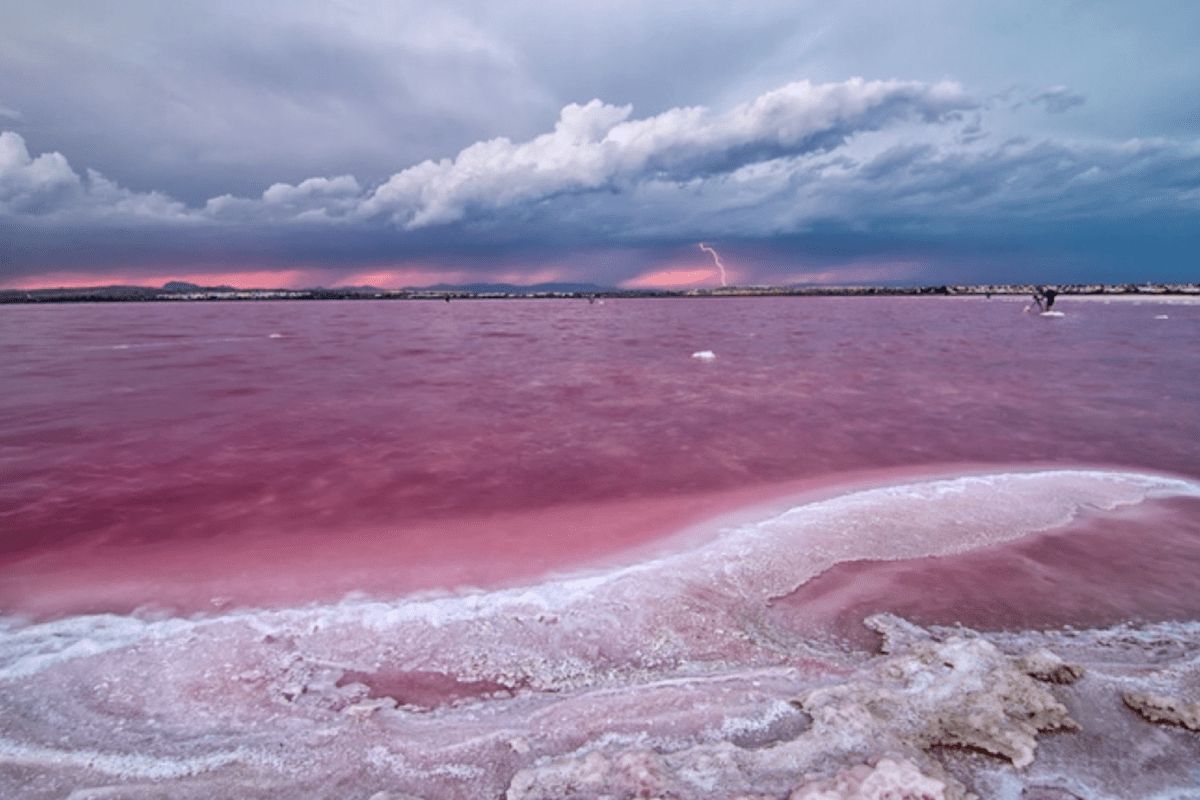
These lakes are not ordinary freshwater lagoons. They are saline lagoons (salinas), historically used for salt extraction. The remarkable colours of rose pink, fading to soft pink. This is caused by microscopic algae and naturally occurring bacteria that thrive in highly saline water. When sunlight reflects across the surface, particularly in the late afternoon, the effect can be almost surreal.
A Landscape Shaped by Salt
Salt production here dates back centuries and remains economically significant in nearby Torrevieja. The mineral content of the water, combined with the surrounding white salt flats. Creating a stark contrast against the deep Mediterranean sky. Flamingos and other migratory birds are regularly seen feeding in the lagoons. This adds to the sense that this is both an industrial and ecological landscape.
Health & Microclimate
The lakes are also associated with the region’s unique microclimate. The combination of saltwater evaporation, low humidity, and consistent sunshine contributes to what many describe as exceptionally clean, dry air. While not a medical claim, the area has long attracted residents seeking a stable and comfortable year-round climate.
A Changing Palette
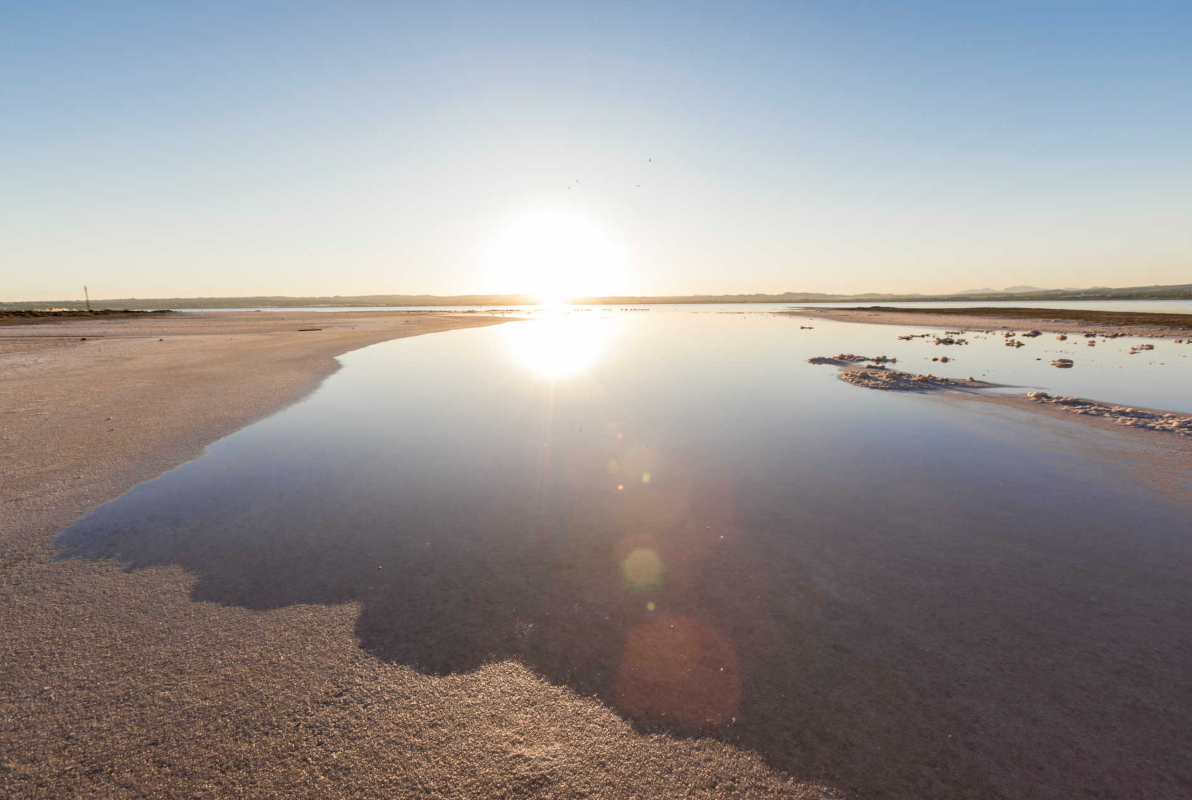
The colour of the lakes shifts with the season, light conditions, and salt concentration. On calm days the surface mirrors the sky; on warmer days, mineral density intensifies the hue. It is a landscape that never looks quite the same twice.
For residents around San Miguel, these lakes are more than a scenic backdrop — they are part of the area’s identity, shaping both its history and its atmosphere.